
Peptides are gaining attention because they sit at an interesting intersection of biology, recovery, and modern wellness. They are naturally involved in many signaling processes in the body, and researchers are studying how certain peptide-based approaches may support tissue repair, skin health, metabolic function, and recovery. This article explains what peptides are, where the interest in peptides for healing comes from, and how to think practically and safely about peptide therapy.
What are peptides, and why are they linked to healing?
Peptides are short chains of amino acids, the same building blocks that form proteins. In the body, they can act like messengers, helping cells communicate about growth, repair, inflammation, immune response, and other functions. That signaling role is one reason healing peptides have become a major topic in wellness, sports recovery, dermatology, and regenerative medicine research. The FDA also recognizes peptide drug products as a distinct area requiring careful clinical pharmacology review, including attention to safety, effectiveness, drug interactions, and immune response. (fda.gov)
The phrase "peptides for healing" can mean several different things. Some people use it to describe clinically approved peptide-based medications. Others use it more broadly for collagen peptides, topical cosmetic peptides, or compounded products marketed in wellness settings. Those categories are not interchangeable, so the most practical first step is to understand what kind of peptide is being discussed, how it is used, and whether there is meaningful evidence for that use.
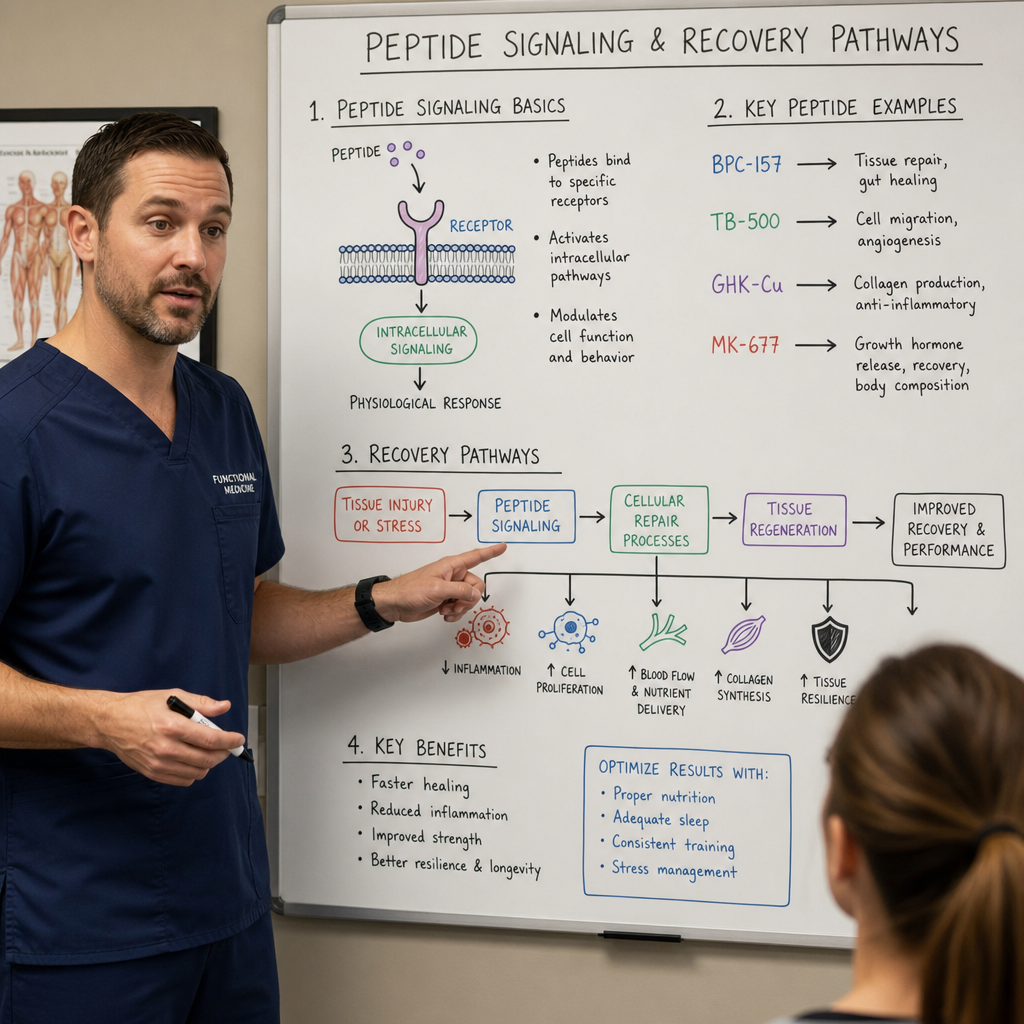
The body already uses peptide signals to repair and renew
Healing is not a single event. It is a coordinated process involving inflammation control, new tissue formation, blood vessel support, collagen remodeling, and immune defense. Reviews of wound-healing research describe peptides as promising because some bioactive peptides may influence antimicrobial activity, inflammation, cell migration, collagen synthesis, and tissue regeneration. (pubmed.ncbi.nlm.nih.gov)
That does not mean every peptide product on the market delivers those effects. It means the biology is plausible and scientifically interesting. The strongest conversations about peptide benefits begin with that distinction: peptides are involved in healing, but individual products still need quality control, appropriate dosing, clinical evidence, and medical oversight.
Common peptide benefits people are exploring
The appeal of wellness peptides is easy to understand. People want to feel better, train consistently, recover from strain, support healthy aging, and address nagging soft-tissue issues without relying only on rest and frustration. Peptides are often discussed because they may fit into several recovery-related goals.
Common areas of interest include:
- Tissue repair support: Some peptide research focuses on wound healing, skin regeneration, and connective tissue remodeling.
- Exercise recovery: Peptides for recovery may include collagen peptides used alongside training, nutrition, and sleep.
- Skin health: Certain topical or cosmetic peptides are used in products designed to support firmness, texture, and visible skin renewal.
- Inflammation balance: Some experimental peptides are studied for their ability to influence inflammatory signaling, though real-world use varies widely.
- Metabolic and hormone-related applications: Some approved peptide medications act on hormonal or metabolic pathways, but these should not be confused with unapproved wellness products.
The practical takeaway is that "peptide benefits" depend entirely on the peptide, the form, the reason for use, and the person using it. A collagen peptide supplement used with resistance training is very different from an injectable compounded peptide promoted online.
Can peptides support tendon and workout recovery?
Peptides may support tendon and workout recovery in specific contexts, especially when collagen or gelatin supplementation is paired with progressive loading and adequate nutrition. Tendons and ligaments heal slowly because they have limited blood supply and slow collagen turnover, so recovery usually depends on a complete plan rather than one product. A recent review on tendon and ligament rehabilitation noted that adequate energy intake and protein are foundational, and that collagen or gelatin with vitamin C before tendon-loading exercise may support collagen remodeling. (pubmed.ncbi.nlm.nih.gov)
This is why the search for peptides for healing tendons should start with the basics: diagnosis, load management, rehab exercise, sleep, calories, protein, and time. Collagen peptides may be a useful addition for some people, but they are not a shortcut around proper rehabilitation. Evidence reviews suggest collagen plus exercise can influence Achilles tendon properties and pain outcomes, while also emphasizing that more research is needed across populations and injury types. (pubmed.ncbi.nlm.nih.gov)
A practical recovery routine may include:
- Get the injury assessed. Persistent tendon pain, swelling, weakness, or loss of function deserves professional evaluation.
- Use progressive loading. Tendons usually respond best to gradual, structured stress rather than total rest or random activity.
- Support collagen formation. Protein, vitamin C, and overall energy intake matter because the body needs raw materials for repair.
- Track symptoms honestly. Pain that escalates, changes your gait, or limits daily activity is a sign to adjust the plan.
- Be patient with timelines. Tendon remodeling often takes longer than muscle soreness recovery.
Peptide therapy should be approached with medical guidance
Peptide therapy generally refers to the use of peptide-based compounds for a specific therapeutic or wellness goal. In a responsible setting, that should involve screening, a clear reason for treatment, informed consent, quality sourcing, follow-up, and attention to side effects or interactions. It should not feel like buying a mystery vial because a social media post promised faster healing.
This matters because quality and regulation vary. The FDA states that compounded drugs are not FDA-approved and are not reviewed by the agency for safety, effectiveness, or quality before marketing. (fda.gov) The FDA has also identified concerns with some compounded peptide substances, including inadequate safety information, immunogenicity concerns, formulation complexity, and peptide-related impurities. (fda.gov)
Before starting peptide therapy, ask a clinician or qualified provider:
- What exact peptide is being recommended, and why?
- Is it FDA-approved for this purpose, compounded, cosmetic, or a dietary supplement?
- What evidence supports its use for my goal?
- What are the possible side effects, contraindications, and interactions?
- How will progress be measured beyond "feeling better"?
- Where is the product sourced, and what quality standards apply?
- What should make me stop using it and seek care?
These questions do not make you difficult. They make you informed.
Natural recovery still does most of the heavy lifting
Even the most promising peptides for healing work best, when appropriate, inside a broader recovery strategy. Your body repairs tissue through sleep, circulation, nutrient availability, immune coordination, and mechanical signals from movement. If those foundations are missing, a peptide-focused plan may disappoint.
Think of peptides as potential tools, not the whole toolbox. For an active person, the foundation usually includes consistent sleep, enough calories, high-quality protein, hydration, smart training progression, and recovery days. For someone dealing with a wound or chronic health condition, the foundation may also include blood sugar management, infection control, circulation support, and professional wound care.
A simple healing-support checklist:
- Prioritize seven to nine hours of sleep when possible.
- Eat enough protein across the day rather than saving it all for one meal.
- Include vitamin C-rich foods to support collagen-related processes.
- Avoid repeatedly training through sharp or worsening pain.
- Keep follow-up appointments for injuries that are not improving.
- Be cautious with products marketed as "research only" or sold without medical oversight.
Choosing wisely in a crowded wellness market
The peptide space can feel exciting, but it can also be confusing. Terms like "regenerative," "anti-aging," "repair," and "optimization" are often used loosely. A clear, professional approach keeps the conversation grounded in your actual goal: recovering from training, supporting skin health, addressing a tendon issue, or exploring medically supervised care.
When comparing options, separate the category before judging the claim. Collagen peptides in a nutrition plan, topical skincare peptides, FDA-approved peptide medications, and compounded wellness peptides each come with different evidence standards and risks. If a product promises dramatic results with no evaluation, no discussion of side effects, and no clear quality controls, that is a reason to slow down.
The balanced takeaway
Peptides are part of the body's natural language for repair, renewal, and regulation, which is why the interest in healing peptides continues to grow. Research into bioactive peptides, wound care, connective tissue support, and recovery is promising, but the practical use of peptides for healing should be careful, specific, and evidence-aware.
If you are curious about wellness peptides or peptide therapy, start with your goal, your health history, and a qualified professional conversation. The best recovery plan is rarely built around one ingredient. It is built around the right diagnosis, strong fundamentals, realistic expectations, and tools that fit your body safely.