
Semaglutide is the active ingredient behind several well-known prescription medicines, including Ozempic and Wegovy. The simple answer to Ozempic vs Wegovy is that they share the same active drug, but they are approved for different primary uses, come in different dosing approaches, and should be chosen with a clinician based on your health history and goals.
Is semaglutide the same as Ozempic or Wegovy?
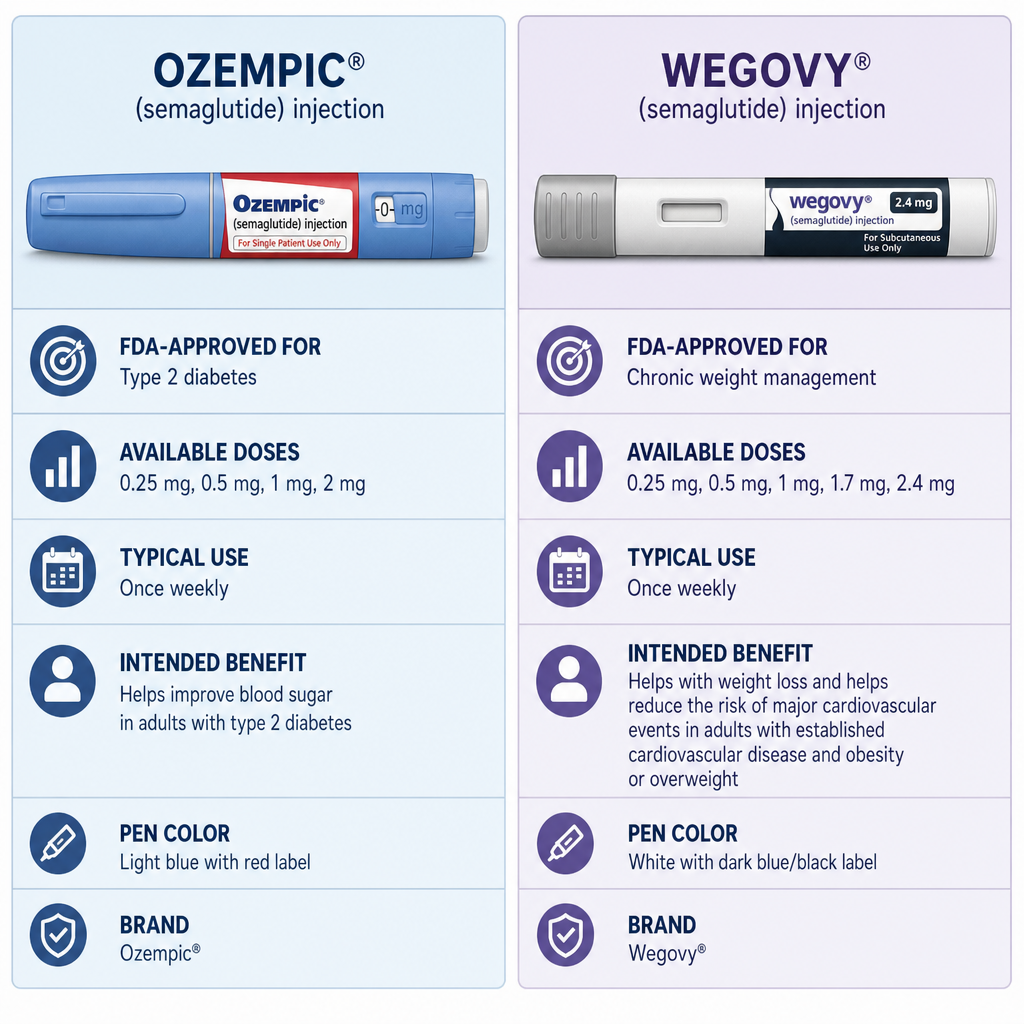
Yes and no. Semaglutide is the active ingredient; Ozempic and Wegovy are brand-name medications that contain semaglutide. So when people ask, "is semaglutide the same as Ozempic or Wegovy?" the clearest answer is: semaglutide is the drug, while Ozempic and Wegovy are specific products with their own FDA-approved indications, doses, labeling, and delivery formats.
Ozempic is approved for adults with type 2 diabetes to improve blood sugar with diet and exercise, reduce major cardiovascular event risk in adults with type 2 diabetes and established cardiovascular disease, and reduce certain kidney-related risks in adults with type 2 diabetes and chronic kidney disease.
Wegovy is approved with reduced-calorie diet and increased physical activity for chronic weight management in certain adults and adolescents, cardiovascular risk reduction in adults with established cardiovascular disease and overweight or obesity, and, as an injection, treatment of certain adults with noncirrhotic MASH and moderate to advanced liver fibrosis. (dailymed.nlm.nih.gov)
The key difference is the treatment goal
The biggest practical difference is not the ingredient; it is the reason the medication is being prescribed. Ozempic is generally discussed in the context of type 2 diabetes care, including blood sugar control and risk reduction for certain diabetes-related cardiovascular and kidney outcomes.
Wegovy is generally discussed in the context of long-term weight management, cardiovascular risk reduction in people with cardiovascular disease and overweight or obesity, and specific MASH treatment criteria for the injectable form. (dailymed.nlm.nih.gov)
That distinction matters because insurance coverage, clinical monitoring, dose targets, and success measures may differ. A person using Ozempic may be tracking A1C, fasting glucose, kidney function, and cardiovascular risk factors. A person using Wegovy may be tracking weight-related health markers, tolerability, nutrition, activity habits, and whether the medication supports long-term weight reduction.
A simple way to think about the difference:
- Ozempic: semaglutide product used for adults with type 2 diabetes, with additional approved cardiovascular and kidney risk-related uses in defined diabetes populations.
- Wegovy: semaglutide product used for chronic weight management in eligible patients, cardiovascular risk reduction in a defined overweight or obesity population, and injectable treatment for certain adults with MASH.
- Semaglutide: the active ingredient, not a complete description of the product, dose, or approved use.
Semaglutide uses extend beyond one brand name
Understanding semaglutide uses helps reduce confusion. Semaglutide belongs to a medication class called GLP-1 receptor agonists, which are designed to act on pathways involved in blood sugar regulation, appetite, and digestion. In real-world conversation, people often use "semaglutide," "Ozempic," and "Wegovy" interchangeably, but that shorthand can hide important medical and regulatory differences.
For example, the Ozempic label describes once-weekly use and a gradual dose increase beginning at 0.25 mg weekly, while Wegovy injection also starts at 0.25 mg once weekly and follows a dose-escalation schedule toward maintenance dosing.
Wegovy tablets, however, are taken once daily in the morning on an empty stomach with water, with specific instructions about waiting before eating, drinking, or taking other oral medicines. (dailymed.nlm.nih.gov)
This is why "same active ingredient" does not mean "same prescription." Your clinician is not only choosing semaglutide; they are choosing a labeled product, dose plan, monitoring strategy, and treatment goal.
Ozempic benefits are tied to diabetes care
The most discussed Ozempic benefits often include blood sugar improvement and, for certain adults with type 2 diabetes, approved risk reduction related to cardiovascular and kidney outcomes. These are meaningful benefits for the right patient, but they are not the same as saying Ozempic is simply a weight loss drug.
Although some people may lose weight while taking Ozempic, its FDA-approved indications are centered on type 2 diabetes and defined related risks. (dailymed.nlm.nih.gov)
From a practical standpoint, Ozempic may be considered when a clinician wants to address type 2 diabetes with a medication that can fit into a weekly injection routine. It may also be part of a broader care plan that includes nutrition, movement, glucose monitoring, cholesterol management, blood pressure care, and kidney health monitoring.
Before starting Ozempic, patients should ask:
- What is my main treatment goal: blood sugar, cardiovascular risk, kidney risk, weight change, or several of these?
- How will we measure whether the medication is working?
- What side effects should I expect during dose increases?
- Do any of my current medications increase the risk of low blood sugar?
- What should I do if I miss a dose or have vomiting, dehydration, or severe abdominal pain?
What Wegovy effects should patients expect?
The intended Wegovy effects include long-term weight reduction and maintenance when used with reduced-calorie eating and increased physical activity in eligible patients.
Wegovy also has approved cardiovascular risk-reduction use in adults with established cardiovascular disease and overweight or obesity, and the FDA has approved Wegovy injection for certain adults with MASH and moderate to advanced fibrosis under the applicable labeling. (dailymed.nlm.nih.gov)
The effects people feel day to day are often digestive. The Wegovy label reports gastrointestinal reactions commonly in adult weight-reduction trials, with nausea, vomiting, and diarrhea among the frequently reported events.
Ozempic's common adverse reactions also include nausea, vomiting, diarrhea, abdominal pain, and constipation. (dailymed.nlm.nih.gov)
That does not mean everyone has the same experience. Some people tolerate dose escalation well, while others need more time, dietary adjustments, or a discussion with their prescriber.
Because GLP-1 medications can delay stomach emptying and may affect other clinical situations, patients should tell healthcare professionals about upcoming procedures, other medicines, pregnancy plans, gallbladder symptoms, pancreatitis history, and diabetes eye disease concerns.
Is semaglutide the same as Wegovy or Ozempic when it is compounded?
No, not necessarily. The phrase "is semaglutide the same as Wegovy or Ozempic" becomes especially important with compounded or online products. FDA-approved Ozempic and Wegovy have gone through FDA review for their labeled safety, effectiveness, and quality; compounded products do not undergo the same FDA premarket review.
The FDA has warned about dosing errors with compounded injectable semaglutide and has raised concerns about some compounders using semaglutide salt forms, such as semaglutide sodium or semaglutide acetate, which are different active ingredients than those used in approved drugs. (fda.gov)
If you are considering any semaglutide product outside a standard pharmacy pathway, slow down and verify it. The lower price or faster access may look appealing, but unclear dosing instructions, multi-dose vial measurements, questionable sourcing, or misleading "generic Ozempic" claims can create real safety concerns.
Use this safety checklist:
- Confirm the prescriber is licensed and has reviewed your medical history.
- Confirm the pharmacy is licensed and reachable.
- Ask whether the product is FDA-approved or compounded.
- Avoid products advertised as research chemicals, "not for human use," or unofficial generics.
- Make sure you understand the dose in milligrams, not just "units."
- Report unexpected or severe side effects promptly.
Ozempic alternatives depend on the reason you need treatment
There is no single list of Ozempic alternatives that fits everyone. If the goal is type 2 diabetes control, alternatives may include other injectable or oral diabetes medications, lifestyle changes, or combinations selected around A1C goals, kidney function, heart history, weight considerations, cost, and tolerability.
If the goal is chronic weight management, alternatives may include other FDA-approved weight-management medications, intensive lifestyle programs, nutrition support, bariatric procedures for eligible patients, or a different GLP-1-based option.
The important point is to compare alternatives by medical purpose, not popularity. A medication that is appropriate for someone with type 2 diabetes may not be the best match for someone without diabetes seeking weight management. Likewise, a weight-management medication may not be the right answer if the main concern is glucose control, kidney disease risk, or medication interactions.
How to discuss Ozempic vs Wegovy with your clinician
A productive conversation starts with clarity. Instead of asking only which drug is "stronger," ask which product matches your diagnosis, risk profile, and long-term plan. Bring a current medication list, your recent lab results if available, your weight and health history, and any previous experience with nausea, reflux, gallbladder disease, pancreatitis, or low blood sugar.
You can also ask your clinician to explain:
- Why they recommend Ozempic, Wegovy, or another option.
- What benefits are realistic for your specific situation.
- Which side effects require urgent attention.
- How long you should try the medication before reassessing.
- What nutrition, protein intake, hydration, activity, and follow-up habits should support treatment.
The practical takeaway
Semaglutide is the shared active ingredient, but Ozempic and Wegovy are not interchangeable labels. Ozempic is primarily tied to type 2 diabetes care and certain related cardiovascular and kidney risk uses, while Wegovy is tied to chronic weight management, cardiovascular risk reduction in a defined overweight or obesity population, and specific MASH treatment use for the injection.
If you are comparing Ozempic vs Wegovy, the best next step is not to chase the brand name you hear most often. It is to work with a qualified healthcare professional who can match the medication, dose, monitoring plan, and safety considerations to your actual health goals.