
Peptides are showing up everywhere in skin care, wellness conversations, and aesthetic treatment plans, but the most useful question is not whether they are "transformative" for everyone. It is what a realistic peptides before and after journey can look like, what changes are worth tracking, and when professional guidance matters.
This guide explains topical peptides, copper peptides, glow-focused formulas, and peptide therapy in a practical way so you can judge results with a clearer eye.
What can peptides before and after results realistically show?
Peptides before and after results can show gradual changes in skin texture, hydration, firmness, recovery, or overall radiance, depending on the peptide type, product quality, consistency, and the person using it. They should not be read as guaranteed proof that every user will see the same outcome. In skin care, peptides are often discussed because they relate to proteins such as collagen and elastin, which help skin look firm and resilient.
Cleveland Clinic notes that peptides in skin care are commonly used with the goal of supporting a smoother, firmer-looking complexion, though results vary by formula and routine. (health.clevelandclinic.org)
The phrase before and after peptides is also broader than many people realize. A topical serum, an oral supplement, and a medically supervised injectable protocol are very different experiences. The safest way to interpret results is to focus less on dramatic photo claims and more on documented changes over time, supported by good lighting, consistent use, and professional advice when treatment moves beyond cosmetics.
The basics behind peptide benefits
Peptides are short chains of amino acids, the building blocks that make up proteins. In beauty and wellness marketing, they are often described as "messengers" because some peptides can signal or support processes related to skin appearance, repair, or hydration. That does not mean every peptide works the same way, and it does not mean a product can reverse aging, heal disease, or replace medical care.
For skin-focused routines, peptide benefits are usually discussed in terms of appearance and comfort. People may look for softer fine lines, a stronger-looking skin barrier, improved bounce, or a more even glow.
Collagen itself plays an important role in skin structure and wound healing, and some research summarized by Cleveland Clinic suggests collagen peptides may be helpful for skin hydration and elasticity, though the evidence is not the same for every product or use case. (my.clevelandclinic.org)
A practical way to think about peptides is to match the ingredient to the goal. A lightweight peptide moisturizer may be helpful for dryness and a crepey look. A copper peptide serum may appeal to someone focused on firmness and visible recovery. A clinic-based peptide therapy plan belongs in a different category because it involves individualized medical screening, dosing, and monitoring.
Before and after peptides: what to track
The best before-and-after comparison starts before the first application or appointment. Many people judge too quickly, switch products too often, or compare their skin to influencer photos taken under different lighting. A simple tracking routine can make peptide reviews and personal progress more meaningful.
Use this checklist before evaluating results:
- Take baseline photos in consistent lighting. Use the same room, distance, facial expression, and time of day.
- Track one main goal. Choose texture, hydration, redness, firmness, glow, or recovery rather than trying to measure everything.
- Keep the rest of the routine steady. If you add retinoids, acids, devices, and peptides at the same time, you will not know what helped.
- Watch for irritation. Redness, itching, stinging, swelling, or breakouts may mean the product is not a good fit.
- Give topical products reasonable consistency. Visible cosmetic changes usually require regular use, but discontinue anything that causes a concerning reaction.
- Separate cosmetic claims from medical claims. A serum promising radiance is not the same as a therapy prescribed for a diagnosed condition.
This kind of tracking protects you from overreacting to a single good skin day or a single bad one. It also gives a clinician, aesthetic provider, or skin care professional better information if you need help adjusting your plan.
Copper peptides before and after: what makes them different
Copper peptides are popular because they combine peptide structures with copper, a trace element involved in normal skin biology. Searches for copper peptides before and after often focus on smoother texture, improved-looking firmness, and a healthier-looking skin surface.
Research literature has explored copper's role in wound healing, tissue repair, and skin-related biological processes, but consumer skin care results still depend on formulation, concentration, skin tolerance, and the overall routine. (pubmed.ncbi.nlm.nih.gov)
In a cosmetic routine, copper peptides are often used as a serum step after cleansing and before moisturizer. They may be especially appealing to people who want a supportive, non-abrasive ingredient rather than another exfoliating acid. However, "supportive" does not mean universally gentle. Sensitive skin can still react, especially when copper peptides are layered with strong actives.
For a more useful copper peptides before and after comparison, look for subtle but meaningful signs. Skin may appear less dull, feel more comfortable, or look more resilient over time. If the goal is dramatic wrinkle correction, scar treatment, or wound care, that is a medical or procedural conversation rather than something to judge from online photos alone.
Glow peptides before and after results are usually about radiance
Glow peptides before and after photos often highlight brightness, hydration, and smoother-looking makeup application. "Glow peptides" is usually a marketing-friendly phrase rather than a single scientific category. These products may combine peptides with hydrators, antioxidants, niacinamide, or barrier-supporting ingredients to create a fresher-looking finish.
That glow can be real, but it is often the result of several factors working together. Hydrated skin reflects light more evenly. A calmer barrier can make the complexion look less blotchy. Consistent sunscreen use can help prevent new discoloration from becoming more noticeable. In other words, the peptide may be part of the story, not the whole story.
A balanced glow-focused routine might include:
- A gentle cleanser that does not leave skin tight.
- A peptide serum or moisturizer suited to your skin type.
- A barrier-supporting moisturizer if skin feels dry or reactive.
- Daily sunscreen in the morning.
- Slow introduction of stronger actives, if needed, rather than layering everything at once.
This approach keeps the routine practical. It also makes your before-and-after photos more honest because improvements are less likely to be hidden by irritation from overdoing it.
Are peptide injections before and after results different from topical results?
Yes, peptide injections before and after results are different because injections are medical interventions, not cosmetic skin care products. They may involve prescription oversight, sterile preparation, individualized dosing, side effect monitoring, and a clear reason for treatment.
Searches such as peptides injections before and after can be tempting, but photos and testimonials cannot show whether a treatment is appropriate, safe, legal, or evidence-based for your situation.
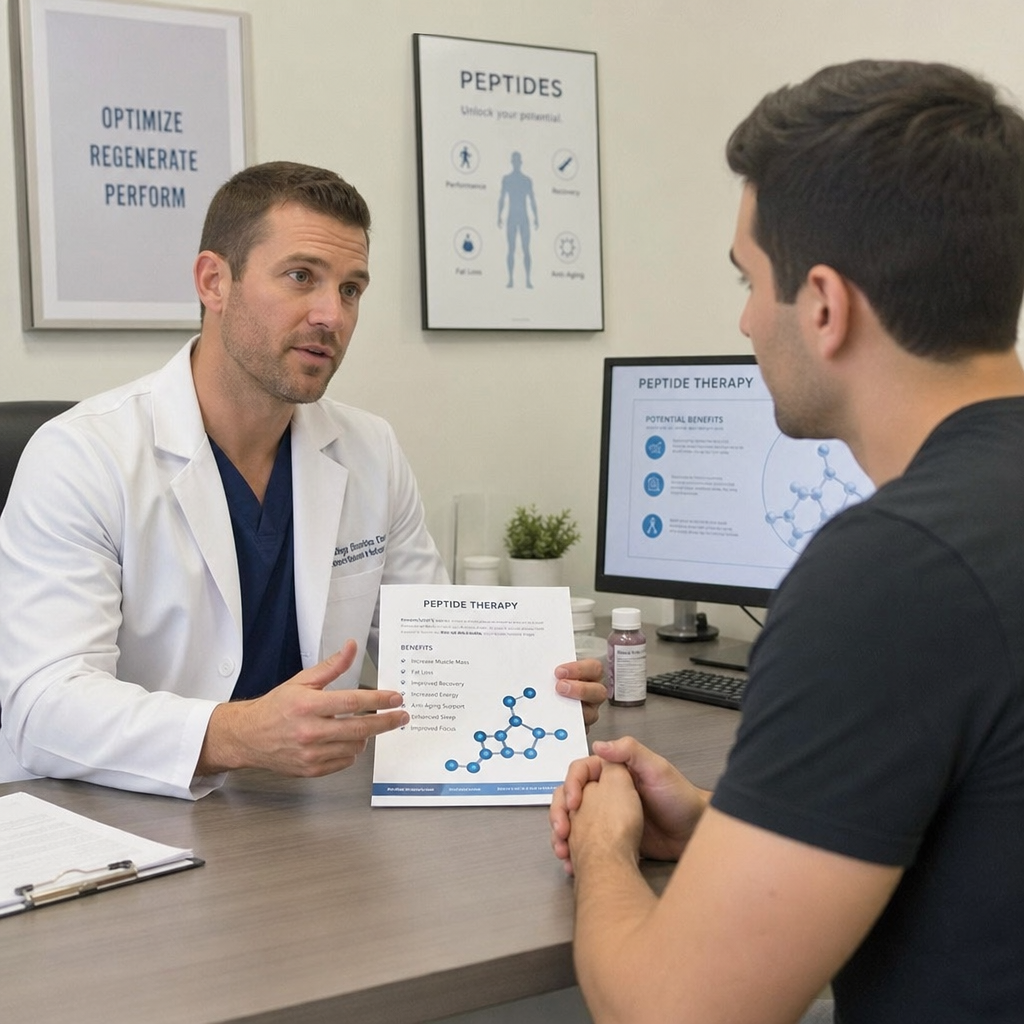
Peptide therapy should be discussed with a qualified medical professional who can review your health history, medications, goals, and risk factors.
This is especially important because some peptide products promoted online may be compounded, and the FDA explains that compounded drugs are not FDA-approved and are not reviewed by the agency for safety, effectiveness, or quality before marketing. (fda.gov)
That does not mean every compounded medication is automatically inappropriate. It does mean the decision requires more care than reading peptide reviews or comparing dramatic progress photos. If a provider recommends injectable peptide therapy, ask what peptide is being used, why it is being recommended, what evidence supports it for your goal, where it is sourced, what side effects are possible, and how progress will be monitored.
How to read peptide reviews without being misled
Peptide reviews can be helpful when they describe skin type, product use, side effects, and realistic timing. They become less useful when they rely on filters, vague claims, or extreme transformations without context. A five-star review that says "my skin changed overnight" may be exciting, but it does not tell you much about long-term performance.
Look for reviews that mention:
- The exact product or therapy type. Topical copper peptides are not the same as injectable peptide therapy.
- The full routine. Retinoids, exfoliants, moisturizers, sunscreen, diet, sleep, and procedures can all influence results.
- Skin type and concerns. Oily, dry, sensitive, acne-prone, and mature skin may respond differently.
- Negative reactions. Balanced reviews that mention irritation or limitations are often more trustworthy.
- Photo consistency. Similar lighting and angles matter more than dramatic contrast.
Be cautious with reviews that promise guaranteed fat loss, muscle gain, scar repair, anti-aging reversal, or disease treatment without medical evidence. Also be wary of sellers who use "research use only" language while encouraging personal use. When something is injected, swallowed, or used to treat a health concern, the standard for trust should be much higher than influencer enthusiasm.
Getting better results with a practical peptide plan
A successful peptide routine starts with a clear goal. If your concern is dullness, choose a glow-oriented topical product and support it with hydration and sunscreen. If your concern is fine lines or firmness, consider a formula that combines peptides with other well-tolerated supportive ingredients. If your concern is medical, hormonal, metabolic, inflammatory, or recovery-related, skip self-experimentation and speak with a licensed clinician.
It also helps to introduce peptides slowly. Patch test when appropriate, add one new product at a time, and avoid assuming that tingling means effectiveness. For many people, the best results come from a routine that is boring in the best way: consistent, gentle, and easy to repeat.
If you are comparing before and after peptides for yourself, define success before you start. Success might be skin that feels less dry, makeup that sits more smoothly, a softer look around fine lines, or confidence that your routine is not causing irritation. Those are useful outcomes, even if they do not look like a viral transformation post.
A realistic takeaway
Peptides can be a valuable part of a skin care or wellness conversation, but the most trustworthy transformations are gradual, documented, and grounded in the right context. Topical formulas may support smoother, firmer, more hydrated, or more radiant-looking skin, while injectable peptide therapy requires medical supervision and careful sourcing.
Before trusting any peptides before and after claim, ask what was used, how it was used, what else changed, and whether the result matches your goal. The best peptide plan is not the most dramatic one online. It is the one that is safe, consistent, appropriate for your needs, and realistic enough to maintain.