
Peptides are widely used in research settings, but their value depends heavily on confidence in what the material actually contains. Testing peptides helps researchers evaluate identity, purity, concentration, and potential impurities before a peptide is used in a study. With a practical understanding of peptide testing, it becomes easier to choose reliable materials, read documentation, and work with a peptide testing lab more effectively.
What does peptide testing actually confirm?
Peptide testing confirms whether a sample matches its expected identity and whether it meets an acceptable quality standard for its intended research use. In simple terms, it helps answer two essential questions: "Is this the peptide it is supposed to be?" and "How clean is the sample?" Those answers matter because even small differences in composition can affect consistency, interpretation, and repeatability in peptide research.
A peptide may look correct on a label or product sheet, but analytical testing provides the evidence behind that claim. Testing can verify molecular weight, estimate purity, detect related impurities, and flag unexpected contaminants. The goal is not just to produce a certificate or data file; it is to reduce uncertainty before the peptide becomes part of a larger research workflow.
This is why peptide quality should be viewed as a process, not a single claim. Sourcing, synthesis, handling, storage, and documentation all influence the final material. Peptide analysis gives researchers a clearer picture of where a sample stands at a specific point in that chain.
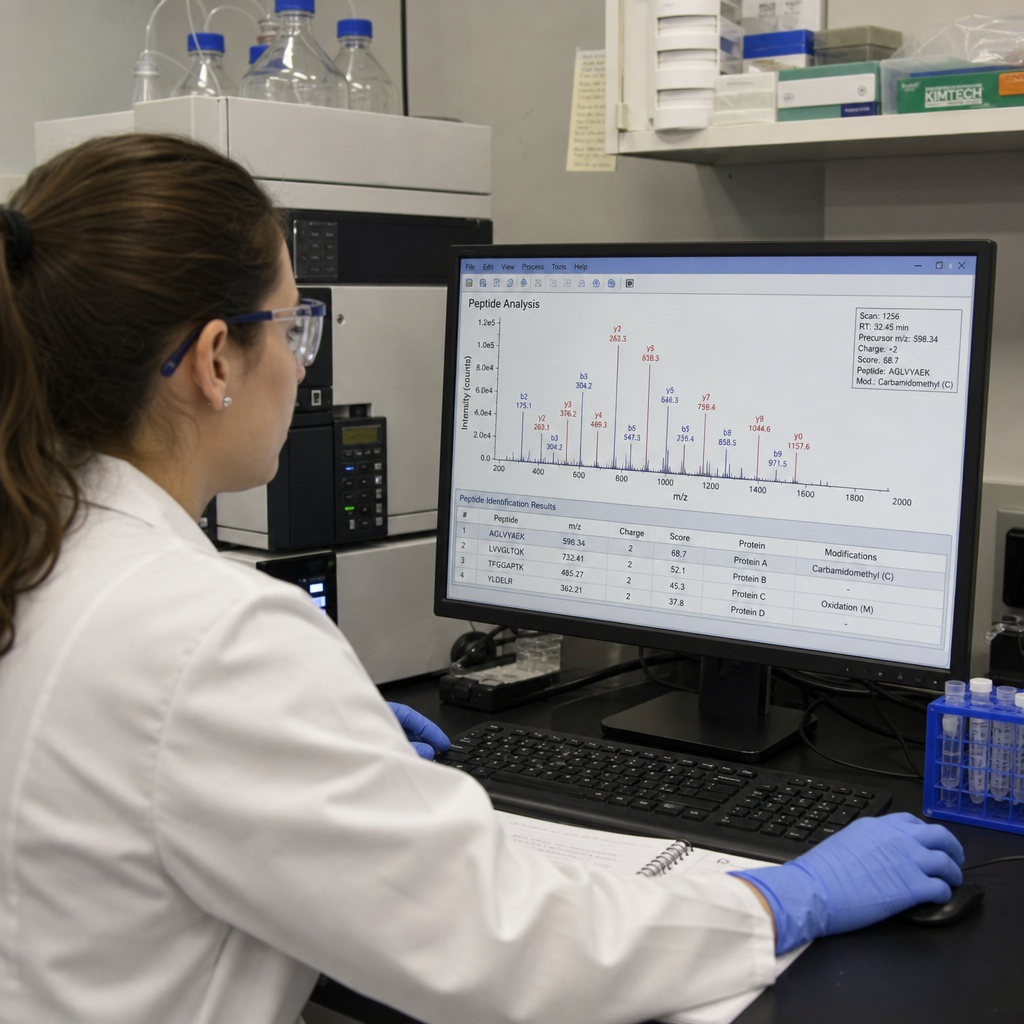
Core concepts behind peptide quality
Peptides are short chains of amino acids, and their structure can be sensitive to how they are manufactured, purified, shipped, and stored. Because of this, peptide quality involves more than whether the correct sequence was requested. A high-quality research peptide should be supported by data that reflects identity, purity, and condition.
Identity testing helps confirm that the peptide's measured characteristics align with the expected molecule. Purity testing peptides focuses on the proportion of the main peptide compared with impurities or byproducts. Additional evaluation may look at residual solvents, counterions, salts, water content, or other characteristics depending on the project and the material.
Researchers should also remember that "purity" is not the same as "suitability." A peptide with a high purity percentage may still require additional review if the application is sensitive to a specific impurity, formulation component, or concentration difference. Good documentation makes these details easier to assess before the peptide is used.
Common methods used in peptide analysis
Peptide testing often combines more than one analytical technique because no single method answers every question. Each method provides a different kind of information, and together they create a more complete quality profile.
Common approaches include:
- High-performance liquid chromatography: Often used to estimate purity by separating the main peptide from related substances. Researchers typically review the chromatogram and purity percentage together rather than relying on the number alone.
- Mass spectrometry: Used to support identity confirmation by comparing the measured molecular mass with the expected mass. This is especially useful for confirming that the correct peptide was synthesized.
- Amino acid analysis: May be used when concentration or composition needs additional confirmation. It can be helpful when precise quantitation is important to the study design.
- Water content or moisture testing: Useful because water content can affect calculated peptide weight and solution preparation.
- Endotoxin or bioburden-related testing: Relevant for certain research contexts where biological contaminants could interfere with results.
- Stability or degradation checks: Used when storage conditions, age, or handling concerns may affect the sample.
The right testing plan depends on the peptide, the research objective, and the level of confidence required. For routine research use, identity and purity data may be the starting point. For more sensitive work, broader peptide analysis may be appropriate.
Why is third party testing for peptides important?
Third party testing for peptides provides an independent review of a sample rather than relying only on internal supplier documentation. This can be valuable when researchers need added confidence, are comparing suppliers, or want to verify a batch before beginning a project. Independent testing does not replace good sourcing practices, but it adds another layer of accountability.
A third-party lab may test a sealed sample, a retained batch, or a submitted material depending on the arrangement. The key benefit is separation between the seller and the analytical result. When the lab is qualified for the required methods and provides clear reporting, its data can help researchers make more informed decisions.
Third party peptide testing is especially useful when:
- A study depends on consistent peptide quality across batches.
- Previous results were inconsistent or difficult to interpret.
- A peptide is expensive, custom, or difficult to replace.
- The research application is sensitive to impurities or degradation.
- Internal documentation is incomplete or unclear.
- A team needs independent records for quality review.
The value comes from context. A third-party result should be reviewed alongside supplier documentation, storage records, and the study's own quality requirements.
How to read peptide testing documentation
A certificate of analysis, lab report, or testing summary can be helpful, but only if the reader knows what to look for. The most important details are usually the sample identity, batch or lot number, test methods, results, date of analysis, and any conditions or limitations noted by the lab.
Start by checking whether the documentation matches the exact material in hand. The peptide name, sequence, lot number, and test date should align with the sample label and purchase or production records. If these details do not match, the data may not apply to the material you are planning to use.
Next, review the methods. A purity percentage is more meaningful when the method used to generate it is clearly stated. For example, HPLC-based purity data should include enough context to understand that the value came from a chromatographic separation, not a general visual estimate.
Finally, read the notes. Reports may include comments about sample preparation, detection limits, unresolved peaks, or assumptions used in calculation. These details can affect how confidently the result should be applied to peptide research.
A practical review checklist
Before relying on a peptide testing report, confirm that it includes:
- The peptide name or sequence.
- The lot, batch, or sample identification number.
- The analytical method used.
- A clear result for each test performed.
- The date of testing or report issue.
- The testing laboratory or responsible analyst.
- Any stated limitations, assumptions, or sample conditions.
- Supporting data, such as chromatograms or spectra, when available.
If a report is missing key information, ask questions before moving forward. Clear documentation is part of peptide quality, not an optional extra.
Choosing a peptide testing lab
Selecting a peptide testing lab should be based on fit, capability, and communication. A good lab should understand the analytical methods needed for peptides and be able to explain what its tests can and cannot determine. The most useful partner is not just a lab that runs a sample quickly, but one that provides results in a format your team can actually interpret.
When evaluating a lab, consider whether it offers the methods relevant to your peptide and research goals. Ask how samples should be prepared, how much material is required, what turnaround expectations are realistic, and what documentation will be included in the final report. If the peptide has unusual modifications, solubility concerns, or sensitivity to handling, discuss those details before sending the sample.
It also helps to ask how the lab reports ambiguous findings. For example, if a sample contains an unexpected peak or a mass result that needs interpretation, you want a report that identifies the issue clearly rather than hiding it behind vague language. Good communication can prevent avoidable delays and confusion.
Good sample handling supports better results
Even accurate testing can be affected by poor sample handling. Peptides may be sensitive to moisture, heat, repeated freeze-thaw cycles, light, or unsuitable solvents. While requirements vary by peptide, careful handling helps preserve the condition of the sample before analysis.
Practical handling habits include:
- Keep samples sealed until they are ready to be prepared.
- Follow any storage guidance provided with the material.
- Avoid repeated opening and closing when moisture exposure is a concern.
- Use clean tools and containers to reduce contamination risk.
- Label aliquots clearly with identity, concentration, date, and storage condition.
- Document any unusual observations, such as discoloration, clumping, or solubility issues.
These steps may seem basic, but they protect the usefulness of peptide testing data. If a sample degrades or becomes contaminated before it reaches the lab, the results may reflect the handling problem rather than the original peptide quality.
Testing supports better research decisions
Peptide testing is not just a quality-control formality. It helps researchers make practical decisions about whether to proceed, retest, adjust preparation, compare batches, or investigate unexpected results. When testing is built into the workflow early, it can reduce uncertainty later.
For example, if an experiment produces inconsistent outcomes, peptide analysis may help determine whether the material itself is a factor. If a new batch performs differently from a previous one, purity, identity, or degradation data can provide useful clues. If a team is preparing for a longer project, testing can help establish a baseline before the peptide is used across multiple stages.
The best approach is to match the testing level to the risk of the work. Not every research project needs an extensive analytical package, but every project benefits from clear thinking about identity, purity, documentation, and handling.
Key takeaways for working with testing peptides
Testing peptides gives researchers clearer evidence about identity, purity, and sample condition. It is most useful when paired with good sourcing, careful handling, and thoughtful interpretation of the data. A report should not be treated as a checkbox; it should be read as part of the research record.
Keep these principles in mind:
- Peptide quality depends on both the material and the documentation behind it.
- Purity testing peptides helps estimate how much of the sample is the intended peptide compared with impurities.
- Mass-based methods can support identity confirmation, while chromatography often supports purity assessment.
- Third party testing for peptides can add independent confidence when supplier data is not enough.
- A qualified peptide testing lab should provide clear methods, usable reports, and responsive communication.
- Proper storage and sample handling help ensure that results reflect the peptide rather than avoidable degradation.
In the end, peptide testing is about confidence. When researchers understand what the data means and where its limits are, they can make better decisions, reduce avoidable uncertainty, and support more reliable peptide research from the start.