
Trusted Third Party Peptide Testing Lab Services
Ensure the quality and purity of your research peptides with a trusted third party peptide testing lab. Gain confidence ...
Peptides are used in research where identity, purity, and batch fit matter. A third party peptide testing lab gives an outside check on a sample. That can help teams make safer calls and keep a clean record. For researchers, brands, and buyers, third party testing and peptide testing services can cut doubt and support better choices.
Why third party peptide testing matters
Third party peptide testing matters because it adds a fresh check between the supplier and the user. Instead of trusting a label, a certificate, or a sales note at face value, a peptide testing lab can review the material and give data on identity, purity, and other quality marks.
This is useful in a market where peptide products can vary in source, handling, and paper trail. Even a good supplier can benefit from an outside check. It helps confirm whether the sample fits the plan and whether the extra papers match the material in hand.
For teams that work with peptides often, this is more than a box to tick. It can be part of a simple risk plan. Clear third party peptide testing lab results give teams a solid base for batch approval, supplier review, follow-up questions, or a deeper check.
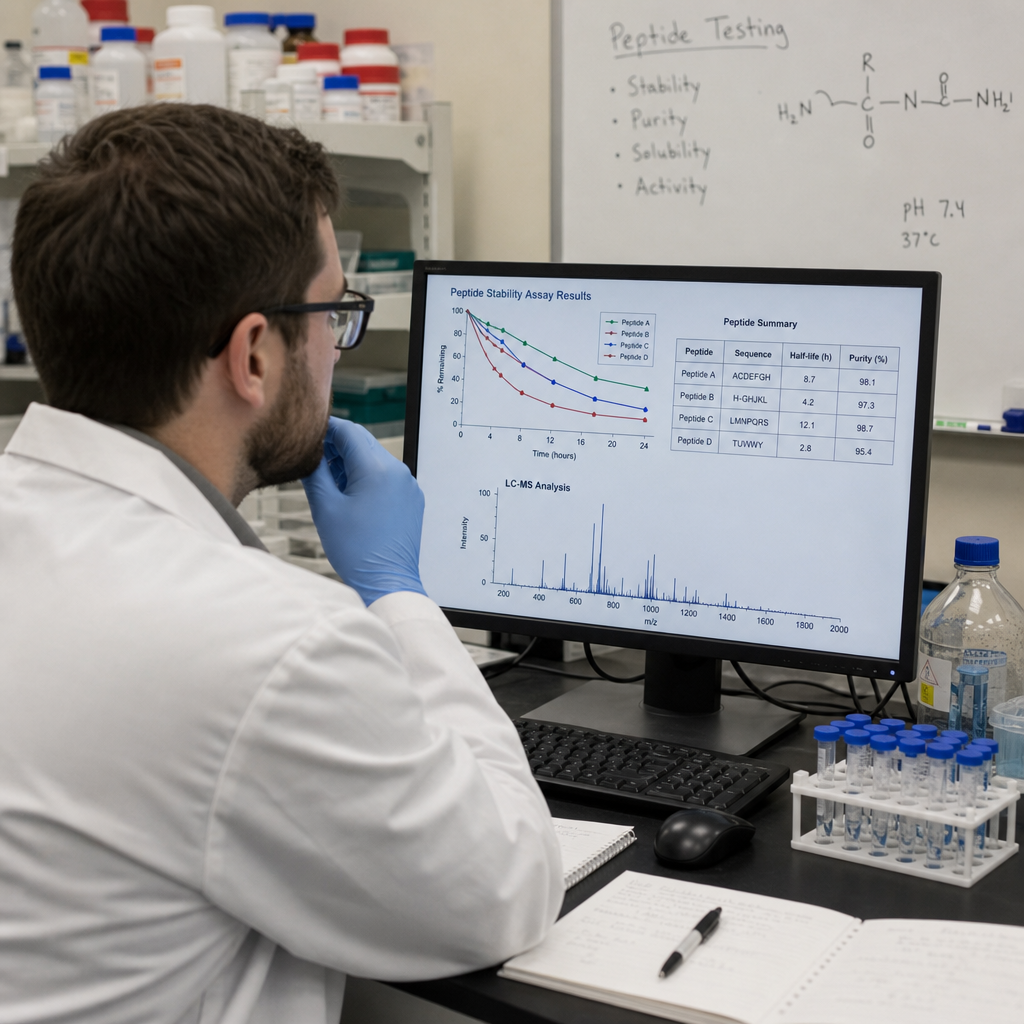
Independent checks build trust
The biggest gain from third party testing is distance. When the same company that sells the material also does the test, the data can still help, but it is not as separate from the sale. A third party peptide testing lab gives more space from the supplier's own process, which can make the results easier to trust.
Independent checks are useful for several groups:
- Researchers who need the same result across tests and want to know the sample before use.
- Product teams that need records to support internal review, vendor review, or batch approval.
- Procurement teams that compare suppliers and want more than price or speed.
- Quality teams that need repeatable steps and good records.
- Brand owners who want stronger proof behind claims such as peptides 3rd party tested.
This trust does not come from a logo on a page. It comes from a test plan that fits the need, clear notes, and a clear readout. A useful report should show what was tested, which method was used, and what the data means for the sample.
Peptide purity testing supports better quality control
Peptide purity testing is one of the most common reasons to use peptide testing services. Purity data can show how much of the sample is the main peptide and how much is made up of mix-ins or related bits.
For research work, purity matters because mix-ins can affect results and make them harder to read. A sample may look fine on paper but act in a different way if its real make-up is not what the team expected. Testing helps cut that doubt by giving more facts before the material is used.
Purity testing can also support batch-to-batch checks. If an organization orders the same peptide over time, third party testing makes it easier to see if each batch looks the same. That is useful when studies, mixes, or development work depend on steady input.
Still, purity is only one part of the picture. A high purity result does not prove every part of quality. Depending on the use, teams may also need identity checks, mass data, residual solvent checks, water content, or other tests. The right scope depends on the material, the use case, and the team's quality rules.
What should a peptide testing lab check?
A peptide testing lab should check the parts that matter most for the sample's use. At a minimum, many teams look for identity and purity. But the plan may include more checks when the risk level, use, or record need calls for it.
-
Identity check The test should help show that the peptide in the sample matches the target. That can cut the risk of a mislabeled or wrong item.
-
Purity check Peptide purity testing shows how much of the sample matches the main peptide compared with mix-ins or related bits.
-
Impurity lookover Impurity data can help teams see if the sample has odd peaks or related bits that need more review.
-
Mass check Mass-based analysis can support the identity call by comparing the seen mass with the expected mass.
-
Paper review The final report should be easy to read and clear enough for internal teams to see what was tested, how it was tested, and what the data means.
Not every sample needs every possible test. A practical plan starts with the question the team needs answered. Are you checking identity? Comparing suppliers? Reviewing a new batch? Looking into a performance issue? The answer should shape the scope.
Better records improve supplier review
Third party peptide testing lab results create a record that can be checked, shared, and compared over time. This is one of the most useful parts of testing, especially for teams that need repeatable buy and quality steps.
When results are in hand, talks with suppliers become more direct. Instead of saying a peptide does not look right, a team can point to test data and ask for a fix or a reason. That helps sort small paper gaps from more serious quality issues.
Good records also support vendor review. If more than one supplier offers the same peptide, outside data can help teams look at more than price, shipping time, or sales claims. Over time, test records may show which suppliers give steady materials and which need closer review.
A clear test record may include:
- The sample name or ID.
- Batch or lot info, when it is there.
- The date the sample was sent or tested.
- The test method used.
- The main results and any notes.
- Limits, assumptions, or next-step notes.
This kind of recordkeeping can make quality talks faster. It also helps teams avoid memory gaps, scattered email threads, or missing supplier papers when making a call.
Third party testing helps manage risk
Peptide work often deals with things that are hard to see with the naked eye. A vial may look normal, the pack may look neat, and the paper trail may seem fine, yet the sample still needs a direct check. Third party testing helps manage that risk by testing the material itself.
Risk control does not mean assuming every supplier is bad. It means seeing that errors, gaps, and mix-ups can happen anywhere in the chain. Outside testing gives a simple guard, especially when a peptide is new, a supplier is new, or a batch will be used in key research work.
Testing may be most useful when:
- Working with a new supplier for the first time.
- Receiving a peptide that is key to a research flow.
- Comparing more than one source for the same compound.
- Looking into unexpected test results.
- Reviewing a batch with thin or unclear papers.
- Backing internal quality steps before approval.
The aim is not to add delay for its own sake. The aim is to catch avoidable problems before they affect later work. In many cases, the time spent checking a sample is small compared with the time lost if the result set turns out to be off.
How peptides 3rd party tested support clear buying
Peptides 3rd party tested give buyers and internal teams outside data they can review. Instead of relying only on broad claims, people can look at the test results and see what the sample is and how it was checked.
This matters most when peptide quality is part of a buy decision. If a supplier or brand says a peptide was tested by a lab on its own, the value of that claim depends on the quality and clarity of the report. A vague note is less useful than a clear paper that shows what was tested and what was found.
For brands, this can also help with clean messaging. Saying products are checked by an outside lab can explain a quality-first approach without overselling. The key is to keep claims true. Third party testing should never be framed as a promise that goes beyond the data.
For buyers, the same rule applies. Ask for the right report, check the sample ID, and make sure the results match the product or batch under review. A report is most useful when it can be tied to the exact material in hand.
Choosing the right third party peptide testing lab
Selecting a third party peptide testing lab should be a careful step. The best lab is not just the one with the fastest turn time or the lowest cost. It should have the right methods, good talk, and real experience with peptide testing services.
When comparing options, use this checklist:
- Right methods: Does the lab offer tests that fit peptide identity, purity, and related review?
- Clear readout: Are the results shown in a way your team can use?
- Sample handling: Does the lab explain how samples should be sent, labeled, and stored?
- Good talk: Can the lab explain which tests fit your question?
- Record standards: Does the report include enough detail for internal review?
- Limits: Does the lab say what a test can and cannot show?
A good peptide testing lab should be open to talking about scope before testing starts. That talk helps avoid gaps between the ask and the result. For example, if a team expects a single purity test to answer identity, mix, and stability, the lab may need to suggest a wider panel.
Turning test data into real choices
Testing is most useful when the results lead to a choice. Before sending a sample, it helps to say what action will follow. Will the team approve the batch, reject it, ask the supplier for more detail, run more tests, or compare it with another source?
A simple review flow might look like this:
- Set the question. Decide if you need identity checks, purity data, supplier review, or issue look into.
- Pick the scope. Work with the lab to choose tests that fit the question.
- Send the sample with care. Use exact labels and keep batch details in order.
- Compare the report with the plan. Check the findings against internal rules or supplier papers.
- Log the call. Note if the sample was accepted, flagged, retested, or moved up the chain.
This turns peptide testing services into a steady quality tool instead of a one-time reaction. It also helps teams make choices based on proof rather than guesswork.
The long-term value of third party peptide testing
The long-term value of third party testing builds over time. One report can answer one question, but repeat testing builds a better quality history. Over time, teams can spot good suppliers, find repeat issues, and set better buy rules.
Outside testing also helps teams stay in sync. Researchers, procurement staff, quality teams, and leaders can all work from the same data instead of reading supplier claims in different ways. That shared view can lower friction and make quality calls easier to explain.
For any group working with peptides, a third party peptide testing lab can give more than a report. It can give clarity, accountability, and a stronger base for good calls. When used well, third party peptide testing lab results turn peptide quality from a claim into something that can be checked, saved, and acted on.
FAQ: Third Party Testing Lab
When should an organization use a third party peptide testing lab?
It is most useful when working with a new supplier, reviewing a key research batch, comparing more than one source, looking into a surprise result, or dealing with thin papers. It can also be part of a regular quality plan for batch approval, supplier review, and long-term recordkeeping.
Is peptide purity testing enough to show overall peptide quality?
No. Purity testing matters, but it is only one part of a full quality review. A high purity result does not prove identity, stability, residual solvents, water content, or every possible impurity issue. Depending on the use, teams may also need identity checks, mass data, impurity review, or other tests.
What makes a third party testing report useful?
A useful report ties the results to the exact sample or batch tested. It should include sample IDs, batch or lot info when it is there, test dates, test methods, results, and any key limits or notes. The goal is to make the data clear and useful for researchers, procurement teams, quality teams, and other users.
How can third party peptide testing improve supplier review?
Outside test results give teams clear data to bring to a supplier instead of vague concerns. If a sample does not fit the plan, the team can point to the record and ask for a fix or an explanation. Over time, these records help show which suppliers give steady materials and which may need more review.
Does the claim that peptides are 3rd party tested always mean the product is good?
No. The value of that claim depends on the quality, fit, and clarity of the report behind it. Buyers should check that the report matches the actual product or batch, see which methods were used, review the results, and understand what the test can and cannot show.
Related Resources
- Ipamorelin Testing Guide
- CJC-1295 Testing Guide
- TB-500 Testing Guide
- BPC-157 Testing Guide
- Retatrutide Testing Guide
- How Peptide Testing Works — understand HPLC, LC-MS, purity, identity, and fill weight
- HPLC vs LC-MS for Peptide Testing — when to use each method
- Identity, Purity, and Fill Weight Explained — what each metric means
- Peptide Testing FAQ — common questions about testing peptides
- Request a Free Peptide Test — send your sample for independent HPLC analysis
Get Your Peptide Tested — Free
PepsReview offers independent HPLC and LC-MS peptide testing at no cost. Ship your sample, get results in 5-7 business days.