
Understanding Semax Peptide: Uses, Benefits & Safety
세맥스(Semax) 펩타이드가 무엇인지 알아보세요: 단순한 노오트로픽(nootropic)이 아니라 뇌 신호 전달과 회복을 위해 연구되는 신경활성 화합물입니다. 용도, 잠재적 이점, 부작용, 그리고 의학적 지침의 중요성에 대해 알아보세요.
개요
Semax는 ACTH에서 유래한 합성 펩타이드로, 호르몬 활성 없이 인지 향상 및 신경 보호 효과를 나타냅니다.
Key Information
Mechanism
뇌에서 BDNF와 NGF를 증가시키고, 모노아민 신경전달을 강화하며, 신경보호 효과를 제공합니다.
Benefits
- 인지 기능 향상
- 신경 보호
- 기억력 향상
- BDNF 및 NGF 증가
- 뇌졸중 후 회복
Side Effects
- 보고된 사례 미미함
- 30년 이상 유의미한 부작용 없음
Contraindications
- None established
Evidence Summary
러시아에서 30년 이상의 임상 사용 이력. 연구 결과에 따르면 인지 수행 능력 향상 및 신경 보호 효과가 나타났습니다.
Research
러시아 임상 연구에 따르면 건강한 사람과 뇌졸중 후 환자 모두에서 인지 수행 능력, 주의력 및 기억력이 향상된 것으로 나타났습니다.
View ResearchSafety
우수한 안전성 프로파일. 러시아에서 30년 이상 사용되는 동안 유의미한 부작용이 보고된 바 없습니다.
Understanding Semax Peptide: Uses, Benefits & Safety
Semax is a synthetic neuropeptide studied for its potential effects on brain signaling, neuroprotection, attention, and recovery after neurological stress. This guide explains what Semax is, what the research suggests, where the claims get ahead of the evidence, and how to think about safety before considering any peptide product. It is educational only and should not replace advice from a licensed healthcare professional.
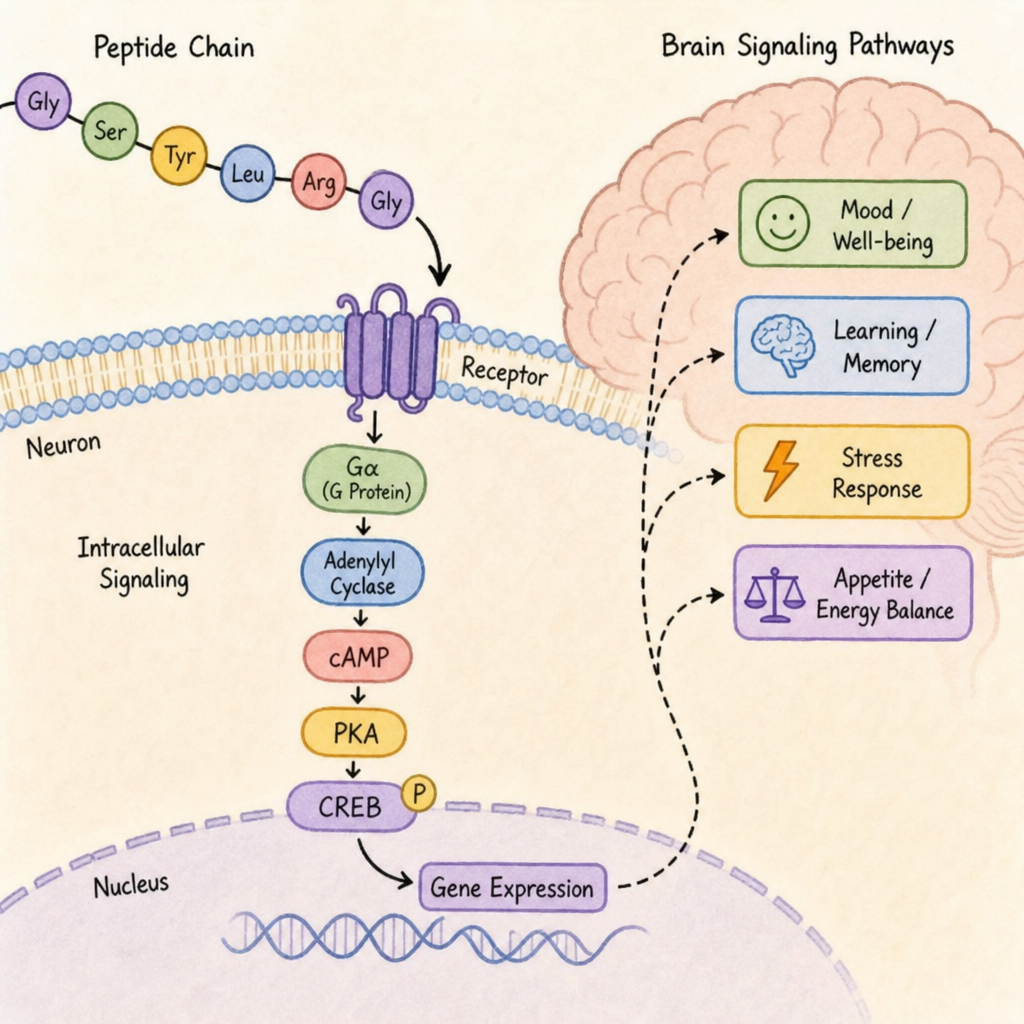
What is Semax peptide?
Semax is a short synthetic peptide related to a fragment of adrenocorticotropic hormone, often described in research as ACTH(4–10) with a stabilizing Pro-Gly-Pro tail. In plain English, it is a lab-made chain of amino acids designed to interact with neurochemical and neurotrophic pathways rather than function like a conventional stimulant. If you are searching "what is semax peptide," the key point is that it is best understood as an investigational neuroactive peptide, not a proven over-the-counter focus aid or a substitute for medical care.
Much of the scientific interest centers on neuroprotection, brain-derived neurotrophic factor, inflammatory signaling, and recovery pathways in the nervous system. Animal and laboratory studies have reported effects on gene expression, inflammatory markers, and proteins involved in brain recovery after ischemic injury, while some human clinical literature comes primarily from Russian or post-Soviet medical contexts. That makes the evidence interesting, but not as broadly validated as drugs that have gone through large, multi-center FDA approval trials.
The research picture is promising but limited
Semax is often marketed with confident language, but the research base is more nuanced. Preclinical studies support several plausible mechanisms, including modulation of inflammatory and recovery-related pathways after brain injury models. Human evidence is more limited and concentrated in specific neurological settings, especially stroke-related research, rather than everyday enhancement in healthy adults.
That distinction matters. A peptide that shows activity in an ischemia model does not automatically become a general-purpose productivity tool. Brain injury, cognitive fatigue, anxiety, ADHD-like symptoms, and healthy focus are different contexts with different standards of proof. A practical reader should treat broad wellness claims as hypotheses unless they are backed by well-designed human studies for that exact use.
What is Semax peptide used for?
Semax has been studied mainly for neurological and cognitive-related applications, including ischemic stroke recovery, neuroprotection, attention, learning, and stress-related brain signaling. However, "studied for" is not the same as "approved for" or "proven for," especially in the United States. The FDA has discussed Semax-related bulk drug substances in the compounding context and has also flagged potential safety concerns for compounded Semax, including immunogenicity risks related to aggregation and peptide impurities.
In practical terms, people usually encounter Semax in three ways:
- Clinical or research discussions about neuroprotection and recovery after neurological injury.
- Nootropic conversations focused on attention, mental clarity, and cognitive endurance.
- Peptide clinic or online product marketing, which may use stronger claims than the evidence can support.
The safest way to read these claims is to separate potential from proof. Semax peptide benefits may be biologically plausible in some areas, but the quality, regulatory status, route of administration, purity, and medical context all shape whether a product is appropriate or safe.
Potential Semax peptide benefits
The most commonly discussed Semax peptide benefits relate to brain function and resilience. Researchers have explored whether Semax may influence BDNF signaling, neuroinflammation, and recovery-related pathways. These mechanisms are relevant because BDNF supports neuroplasticity, while excessive inflammation can worsen outcomes after neurological injury.
Potential areas of interest include:
- Neuroprotection: Semax has been studied in ischemia and brain injury models, where researchers look for reduced damage and improved recovery signaling.
- Cognitive performance: Some discussions focus on learning, attention, and mental energy, but strong human evidence for healthy cognitive enhancement remains limited.
- Stress response: Semax may interact with neurochemical systems involved in stress adaptation, though this does not make it a stand-alone anxiety treatment.
- Post-injury recovery research: The most serious medical interest has been in neurological recovery settings, not casual self-optimization.
For readers, the practical takeaway is simple: benefits should be framed as research interests, not guarantees. If a website promises dramatic focus, instant mood transformation, or universal brain repair, that is a sign to slow down and examine the evidence.
Semax for anxiety is a cautious topic
Semax for anxiety is discussed online, but anxiety is not where the strongest Semax evidence sits. Some preclinical and mechanistic work suggests Semax may affect stress-related pathways, but that does not establish it as a clinically proven anxiety medication. Anxiety can also be worsened by stimulating or activating substances, sleep disruption, thyroid problems, medication interactions, and underlying mood disorders, so self-experimentation can be risky.
If anxiety is the main concern, it is worth comparing Semax with better-studied options, including psychotherapy, sleep interventions, approved medications, and clinically reviewed supplements where appropriate. A clinician can also help distinguish generalized anxiety, panic symptoms, trauma-related hyperarousal, ADHD, depression, and medical causes of restlessness. That distinction is not academic; it changes what is likely to help.
What is Selank?
Selank is another synthetic heptapeptide often mentioned alongside Semax, but it is not the same compound. If you are wondering "what is selank," it is generally described as a tuftsin-derived peptide studied for anxiolytic, or anti-anxiety, effects. A small Russian randomized study compared Selank with medazepam in patients with generalized anxiety disorder and neurasthenia, while later clinical literature compared Selank with phenazepam in anxiety-related disorders.
The simple comparison is this: Semax is usually discussed around neuroprotection, attention, and cognitive signaling, while Selank is more directly associated with anxiety research. Even then, Selank's evidence base is still not the same as broad international approval based on large, modern trials. People often group the two together because both are neuroactive peptides developed in similar research traditions, but their proposed roles are different. See our Selank peptide page for more detail.
Semax side effects and safety considerations
Semax side effects are not as well characterized as side effects for widely approved prescription drugs. Reports and reviews often describe intranasal irritation or transient agitation as possible issues, but limited reporting does not prove long-term safety. With peptides, additional concerns include product purity, inaccurate labeling, sterility, contamination, immune reactions, and unknown interactions with medications or health conditions.
Use extra caution if any of the following apply:
- You are pregnant, trying to conceive, or breastfeeding.
- You have a neurological condition, psychiatric diagnosis, autoimmune disease, diabetes, or uncontrolled blood pressure.
- You take antidepressants, stimulants, benzodiazepines, antipsychotics, sleep medications, or immune-modulating drugs.
- You are considering injectable or research-use products from non-pharmacy sources.
- You have a history of severe allergies or reactions to medications.
A practical safety mindset is not fear-based; it is quality-based. The more a product affects the brain, the more important it is to know exactly what it is, where it came from, how it was prepared, and whether a qualified professional is supervising its use.
A practical Semax dosage guide starts with medical oversight
A responsible Semax dosage guide should begin by saying there is no universal, evidence-backed dose for casual cognitive enhancement. Dosing in research or clinical literature depends on formulation, route, concentration, condition being studied, and the patient population. Copying a protocol from a forum, clinic menu, or vendor page can be misleading because product strength and purity may differ.
Before considering any peptide, use this decision checklist:
- Clarify the goal. Are you trying to address fatigue, anxiety, focus, recovery, or a diagnosed condition?
- Check the evidence for that exact goal. Stroke recovery research does not automatically support use for work performance.
- Review your medical history. Brain-active compounds deserve extra caution with psychiatric, neurological, cardiovascular, and immune conditions.
- Verify the legal and quality context. Regulatory status, compounding rules, and product sourcing matter.
- Discuss alternatives. Sleep, nutrition, exercise, therapy, medication review, and validated treatments may be safer and more effective.
- Avoid stacking blindly. Combining Semax with Selank, stimulants, sedatives, or other peptides makes effects harder to interpret and may increase risk.
This approach may feel less exciting than a simple dose chart, but it is more useful. The right question is not only "how much," but whether Semax is appropriate at all.
How to evaluate Semax claims online
Peptide marketing often blends real mechanisms with exaggerated outcomes. Look for cautious language, citations to primary research, transparent discussion of limitations, and clear statements about regulatory status. Be skeptical of claims that promise guaranteed focus, anxiety relief, neuroregeneration, or "no side effects," especially when paired with direct-to-consumer sales pressure.
A credible explanation should tell you what is known, what is unknown, and what still needs better human research. It should also distinguish Semax from Selank instead of presenting them as interchangeable "brain peptides." Most importantly, it should encourage professional guidance rather than implying that a complex neuroactive compound is just another wellness supplement.
Key takeaway
Semax is a scientifically interesting peptide with research links to neuroprotection, BDNF-related signaling, inflammation, and neurological recovery. Its potential is real enough to deserve careful discussion, but not settled enough to justify broad, casual claims about focus, anxiety, or cognitive enhancement. If you are exploring Semax, treat it as a medical and regulatory question first, a nootropic question second, and an online trend last.
Related Nootropic / Cognitive Peptides
- Selank — Tuftsin-derived peptide studied for anxiety research
- Epithalon — Anti-aging peptide with telomerase research
- DSIP — Delta sleep-inducing peptide for sleep research
- Sermorelin — Growth hormone releasing hormone analog
Key Research Papers on Understanding Semax Peptide: Uses, Benefits & Safety
The following peer-reviewed studies and clinical trials are indexed in our research library for Understanding Semax Peptide: Uses, Benefits & Safety. Each paper links to a detailed summary with key findings, study design, and publication metadata.
- Semax, an ACTH4-10 peptide analog with high affinity for copper(II) ion and protective ability against metal induced cell toxicity — J Inorg Biochem, 2015 (220 citations)
- Semax, synthetic ACTH(4-10) analogue, attenuates behavioural and neurochemical alterations following early-life fluvoxamine exposure in white rats — Neuropeptides, 2021 (100 citations)
- Semax peptide targets the μ opioid receptor gene Oprm1 to promote deubiquitination and functional recovery after spinal cord injury in female mice — Br J Pharmacol, 2025 (20 citations)
- The Potential of the Peptide Drug Semax and Its Derivative for Correcting Pathological Impairments in the Animal Model of Alzheimer's Disease — Acta Naturae, 2025 (20 citations)
- Semax, a Copper Chelator Peptide, Decreases the Cu(II)-Catalyzed ROS Production and Cytotoxicity of aβ by Metal Ion Stripping and Redox Silencing — Bioinorg Chem Appl, 2025 (20 citations)
Related Nootropic / Cognitive Peptides
Other peptides in the nootropic / cognitive category that may be of interest for comparative research:
Vendor Price Comparison
| Product | Vendor | Size | Price | $/mg | Purity | COA | Stock | Visit |
|---|---|---|---|---|---|---|---|---|
| Semax 10mg | 10.0mg | $84.00 | $8.40 | 99%+ | Janoshik (7d) | In Stock | Visit |
Write a Review
Login to write a review
You need an account to share your experience with Understanding Semax Peptide: Uses, Benefits & Safety.
가입Rating Breakdown
Based on 2 리뷰.
리뷰
Used Semax during exam season. Focus was laser-sharp for 4-6 hours per dose. Memory retention improved. Slight anxiety increase compared to Selank but the cognitive boost is stronger. Nasal administration works fast.
Semax gives clean cognitive enhancement without jitters. Focus and memory improved within days. BDNF and NGF increase is real - learning new skills feels easier. Post-stroke recovery data is impressive.